“Add a quote here.”
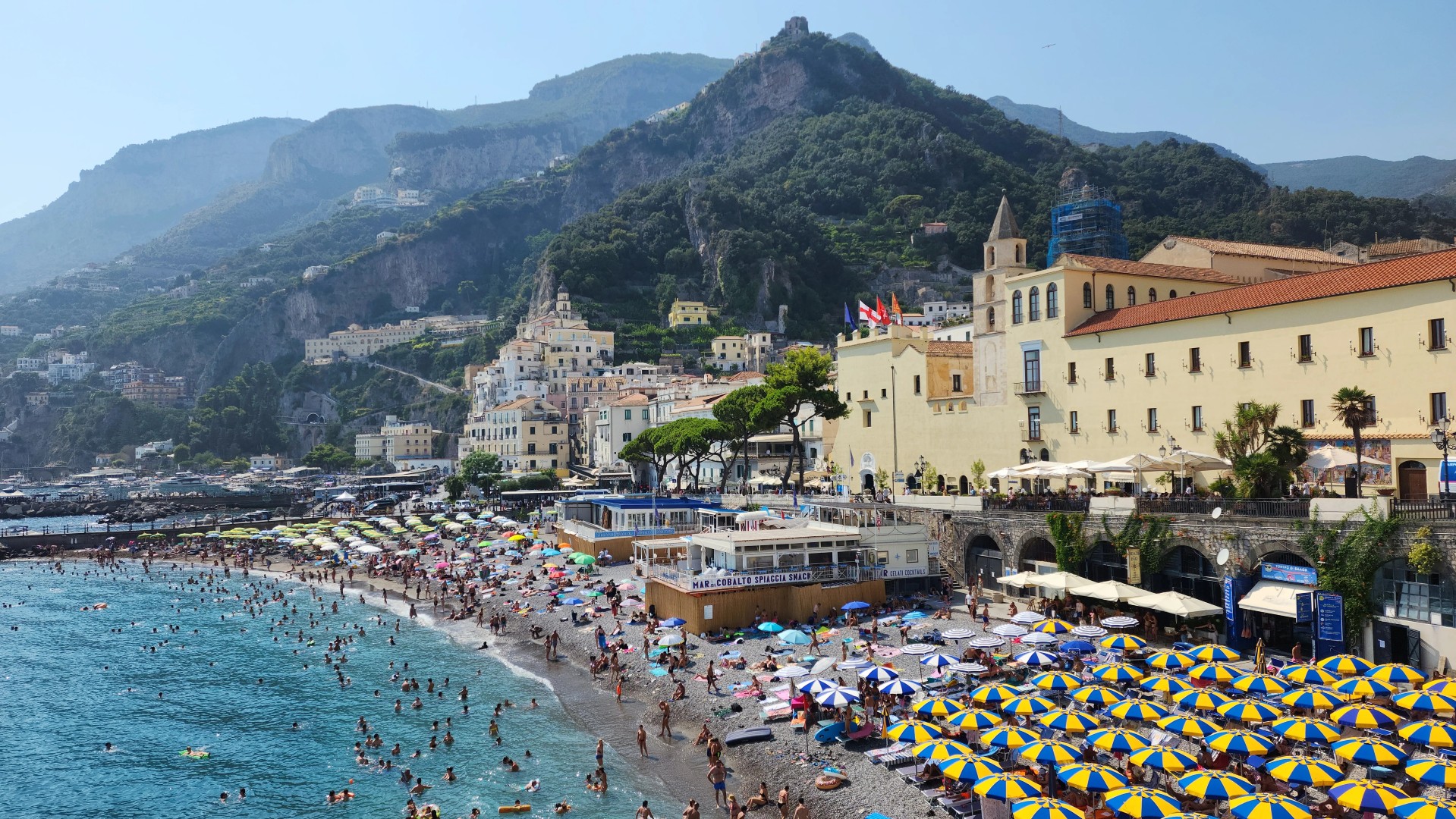
There are places you visit, and there are places that rearrange something inside you. The Amalfi Coast, that dazzling stretch of cliffside villages south of Naples, belongs firmly in the second category.
A republic built on salt and sail
Before it was a holiday dream, Amalfi was a serious maritime power. In its heyday from the 9th to the 12th centuries, the Duchy of Amalfi rivalled Pisa, Genoa and Venice as a Mediterranean trading republic. Its sailors were said to have pioneered the compass as we know it — the so-called "Amalfi Tables" laid out navigation rules centuries before modern charts existed. The town's cathedral, the Duomo di Sant'Andrea, still dominates the main square with its dramatic Arab-Norman architecture and a sweeping staircase that seems purpose-built for arriving with a bit of ceremony. Walking those streets, past faded aristocratic palazzos squeezed between lemon terraces and tumbling bougainvillea, you feel the ghost of that mercantile grandeur everywhere. This isn't just a pretty coastline — it's a place with nearly a thousand years of stories baked into its stones.
White knuckles and sea views
Let's talk about the roads, because anyone who has been here knows they deserve their own chapter. The SS163, the famous Amalfi Drive, threads its way along the cliffs in a series of hairpin bends so tight you'll be playing an ongoing game of chicken with tour buses twice your size. Walls rise on one side; sheer drops to the Tyrrhenian Sea fall away on the other. Locals on Vespas overtake on blind corners with an insouciance that borders on performance art. I mentioned on my main website one of my favourite quotes — Do one thing a day that scares you. Well, let me tell you, hiring a scooter to navigate these roads was as thrilling as it was terrifying. I'm thrilled I am here to write this story. By the end of the trip, we were familiar with a light tap of the horn before every curve, a small courtesy between strangers sharing a road barely wider than a driveway. It's harrowing and beautiful in equal measure — every bend opens onto another postcard.
Cooking under a fierce sun
We had been warned about the heat, but warnings don't quite prepare you for it. Our visit coincided with a record-breaking heat wave across most of southern Europe, with the thermometer pushing 38 degrees (~100 degrees Fahrenheit) nearly everyday. But both Italians and the tourists took it in stride — umbrellas and fedoras dotted my eyeline. We learned quickly: morning walks before nine, long lunches in the shade, and as much time in the water as possible. Honestly, surrendering to that rhythm became part of the charm.
And what lunches they were. The food here deserves every superlative thrown at it. Buffalo mozzarella so fresh it wept milky droplets onto the plate. Scialatielli ai frutti di mare, pasta tangled with clams, prawns and squid caught that morning. Delicate anchovies from Cetara, cured the old way. And everywhere, lemons — enormous, fragrant sfusato lemons turned into granita, risotto, and the potent limoncello you inevitably find yourself sipping at a sea-facing table at sunset.
Plus, as expected, the local wines were a revelation. I'll admit I arrived thinking of Italian wine almost exclusively in terms of my family's years of making it at home — delicious blends and no sulfites because each vintage ended up being consumed rather quickly. But the Campania coast has its own viticultural identity. Falanghina — crisp, citrusy, faintly mineral — was our lunchtime companion nearly every day. Greco di Tufo and Fiano di Avellino came inland from the hills and proved just as memorable, and the red Piedirosso grown on impossible cliffside pergolas tasted like volcanic sunshine. Off the chart, frankly, and priced like you were literally stealing from the winemakers.
A different world, familiar comfort
What struck us most, perhaps, is how utterly unlike home it all is. Whether in New York or Toronto, life runs on schedules, sirens and screens. On the Amalfi Coast, time works differently. Lunch is two unhurried hours. Nothing happens particularly fast, including the boats. Before arriving, I was excited to put my new Rogers Ultimate mobile plan to work — with "Roam Like Home" included so I could talk, text, and stream to my heart's content, but I found myself caring less about it by the hour. And by the end of the trip, I used less minutes, text, and data than the monthly cost to the plan change was worth it. There's a lesson in that.
Yet for all its strangeness, it never felt foreign in a way that wore on us. Perhaps that's the secret of the place: the pace is slow, but the welcome is warm; the roads are mad, but every bend delivers beauty. It's different enough to shake loose everything you carried over with you, and comfortable enough that you stop checking your watch altogether. By the end of the trip, we weren't visitors bracing ourselves against the heat — we were simply two people living smaller, better days, one granita at a time.
Would we go back? Ask the hand luggage that I had to check on the way back (the first time I checked luggage in more than a decade, mind you) filled with carefully wrapped bottles of wine you can't get here. Some questions answer themselves.


A story with a photo
Use this block when one tall photo belongs next to the words. Edit the text, then swap in your own photo and caption.