What Boulder tells us about the future of first response
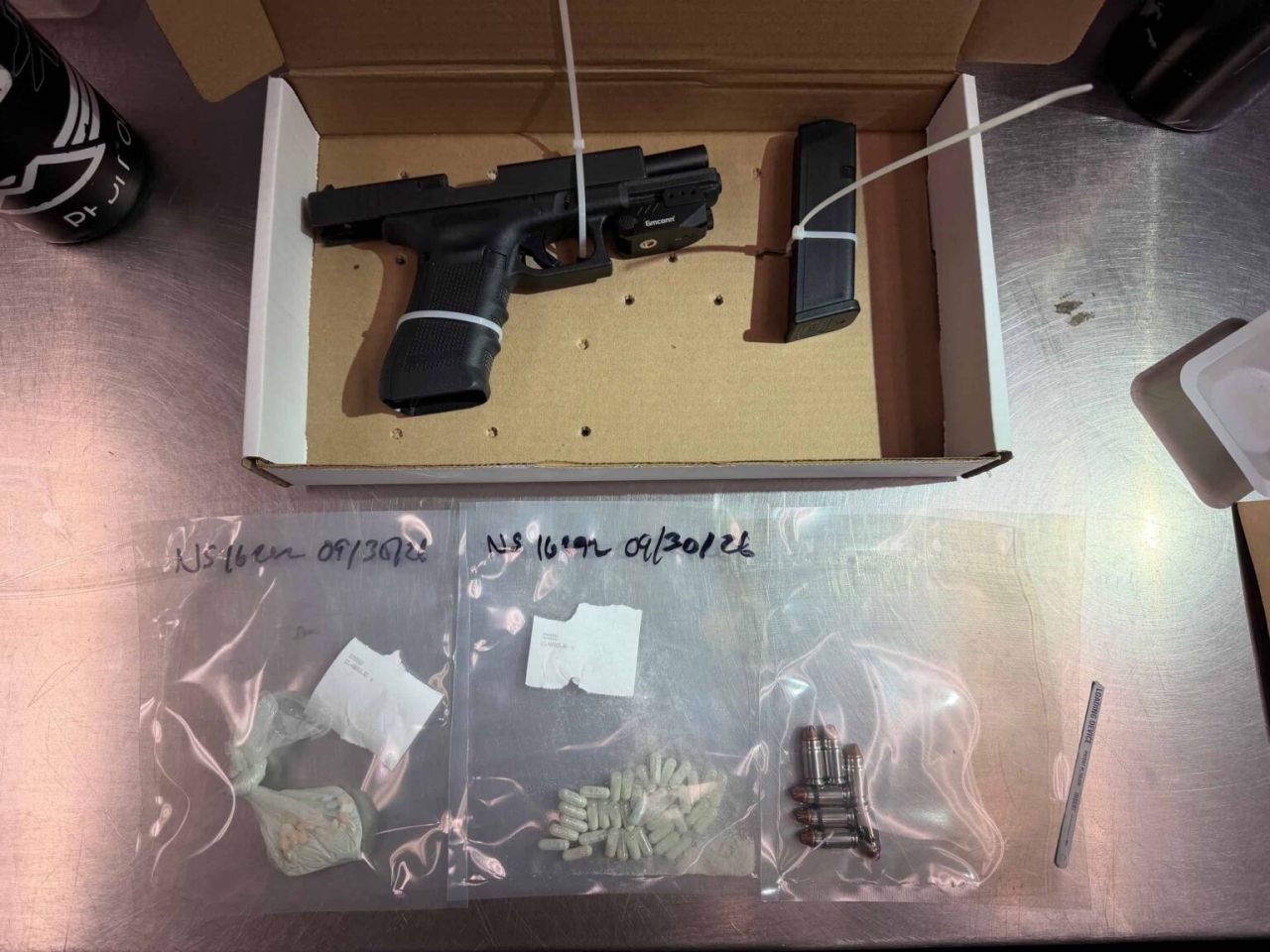
This week, the Boulder Police Department highlighted exactly why Drone as First Responder (DFR) programs are changing modern public safety. In a reported menacing incident involving firearms, a police drone was overhead in just over a minute, providing officers with real-time situational awareness before they arrived on scene and helping coordinate a safe arrest.
Sixty seconds. That is the figure worth pausing on. In emergency response, the first minutes of an incident are often the most dangerous and the least understood. Responders arrive with an address, a dispatch code, and whatever fragments of information a caller managed to convey under stress. Everything else, the number of people involved, whether weapons are present, how the scene is unfolding, must be reconstructed in real time, sometimes at speed, sometimes in the dark, and always with consequences hanging in the balance.
Boulder's deployment compressed that uncertainty dramatically. Before the first officer stepped out of a vehicle, a camera was already aloft, streaming a live view of the scene. Officers could see what they were walking into. They could coordinate. And in this case, they took a suspect into custody without reported injuries, to anyone, including the suspect.
The real story isn't the technology
It is tempting to read this story as a technology success, and in a narrow sense, it is. But the real story is more interesting. It is how drones help bridge the long-standing gap between public safety effectiveness and community privacy expectations.
Traditionally, law enforcement faced two imperfect options when responding to uncertain situations. The first was to send officers in with limited information, accepting the elevated risk to officers, suspects, and bystanders alike. The second was to lean on more persistent surveillance tools, helicopters, fixed camera networks, licence plate readers, which can produce genuinely useful intelligence but also raise legitimate privacy concerns, particularly in communities that have historically borne the brunt of over-policing.
Neither option is satisfying. One asks officers and communities to absorb preventable risk. The other asks citizens to accept a permanent ambient layer of observation in exchange for safety. This is a real tension, not a rhetorical one, and pretending it doesn't exist has not served anyone well.
A different model: mission-driven, temporary, event-based
DFR programs offer a third path, and it is worth being precise about what makes it distinct. These deployments are mission-driven, temporary, and event-based, focused on a specific call for service.
The drone launches because there is an active incident requiring a response. It provides responders with critical information, helps them assess risk, improves decision-making, and then the operation concludes. It is not persistent surveillance. It is not continuously monitoring neighbourhoods. It is not building dossiers on residents going about their day.
This distinction matters enormously, both ethically and practically. A response drone is closer in spirit to a police officer's own eyes than to a surveillance network. It arrives when someone calls for help. It observes what is relevant to the incident at hand. It leaves when the incident is resolved. The scope of its observation is bounded by the scope of the emergency itself.
That bounded quality is exactly what makes the model defensible in a democratic society. Tools whose reach expands to fill whatever capacity exists tend to erode trust over time. Tools whose reach is deliberately constrained by the nature of the mission can earn it back.
What the Boulder outcome actually demonstrates
In the Boulder case, aerial visibility allowed officers to rapidly understand a potentially dangerous situation, safely coordinate their response, and take a suspect into custody without reported injuries. It is worth unpacking what "without reported injuries" quietly contains.
When officers enter a firearms-related call blind, adrenaline is high, information is scarce, and every movement on scene is ambiguous. Ambiguity is where tragedy lives. A hand reaching for a waistband, a silhouette in a doorway, an unidentified object in a hand, these are the moments where split-second decisions go wrong and lives change forever. Real-time aerial awareness doesn't just make operations more efficient; it reduces the ambiguity that drives bad outcomes. The beneficiary of that clarity is not only the officer. It is equally the suspect who is less likely to be misread, and the neighbours who are less likely to be caught in the margins of a confused response.
That outcome demonstrates how technology can increase both officer safety and public safety simultaneously, while remaining narrowly focused on an active event. It is not a trade-off between the two. Done properly, it is a rare alignment of interests.
Beyond "drones versus privacy"
As more agencies deploy DFR programs, the public conversation needs to evolve. Too often it stalls in a familiar standoff: technology advocates dismiss privacy concerns as obstructionism, while privacy advocates treat every airborne camera as the thin end of a wedge. Both positions flatten a genuinely nuanced subject.
The more productive conversation is about design and governance: How is deployment triggered? Who authorises it? What is recorded, for how long, and under what retention policy? Are flight logs and usage data available for independent review? Is there a mechanism for community input and, crucially, community recourse?
These are not questions that technology alone can answer. They are questions about policy, accountability structures, and the culture of the agencies deploying the tools. A DFR program with transparent audit trails, strict retention limits, and clear authorisation criteria is categorically different from one without them, even if the hardware is identical.
The future of public safety isn't simply more technology. It's using technology in a way that is targeted, accountable, transparent, and proportional to the mission. Those four words should be the yardstick against which every deployment, every procurement, and every policy is measured.
How this frames our work at Flyhound
At Flyhound, we consider this with every line of code that goes into our product. Building for public safety means accepting that the trust of the community is not an obstacle to the mission; it is a precondition for it. A tool that officers cannot deploy confidently, and that communities cannot trust, fails everyone regardless of its technical capabilities.
That belief shapes concrete choices: missions scoped to active incidents, data practices designed around minimisation rather than accumulation, and interfaces that make accountability visible rather than buried. We believe the industry's long-term licence to operate depends on getting this right, not just once in a press release, but every single day in every single deployment.
Boulder offered the public a glimpse of what "right" can look like: a fast launch, a clear picture, a coordinated arrest, no injuries, and an operation that ended when the incident did. Small event, big signal.
How have you seen technology be a force for good when it comes to community safety in your neighbourhood?
(Photo via Boulder Police Department press release, accessed from yellowscene.com magazine)